Four things make Pottstown's plumbing profile distinct from communities built after 1960.
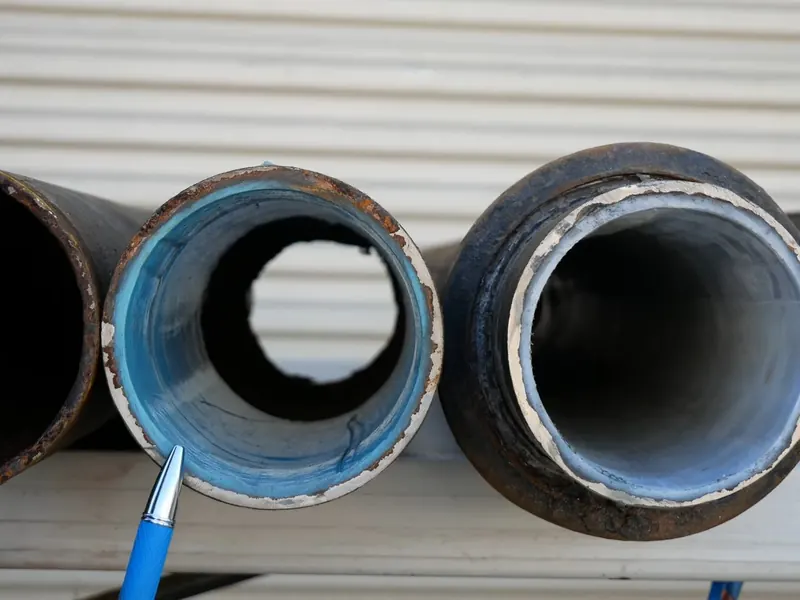
Age of housing stock. The borough core was developed during the Pottstown Iron Company era, which means most homes predate World War II. Homes from the 1880s through the 1920s routinely have lead service lines at the street connection, galvanized supply pipes inside the walls, and cast iron drain stacks that are now 80 to 140 years old. Those cast iron pipes develop internal scaling that reduces flow, then pinhole leaks, then sections that need cutting out. This isn't deferred maintenance; it's physics and age.
Lead service lines and PA Act 120. Pennsylvania American Water (PAW) operates an active lead service line replacement program in older PA boroughs, authorized by PA Act 120 of 2018 and approved by the PA Public Utility Commission in October 2019. PAW replaces both the utility-owned and customer-owned portions of a lead service line at no direct cost. Their program partner, CDM Smith, canvasses door-to-door identifying lines. The private side (the pipe from your curb stop into your home) remains your responsibility after replacement and may need separate attention if it's galvanized steel that ran downstream from lead. We handle exactly that work.
Basements and sump pumps. Nearly every single-family home in Pennsylvania has a basement. Pottstown rowhomes do too, even narrow ones. The Schuylkill River runs along the south edge of the borough. Spring snowmelt, from March through May, saturates the ground across Montgomery County and puts real hydrostatic pressure on basement foundations. A sump pump without battery backup is a calculated gamble: power outages arrive with the same storms that push the most water through the soil.
PA winters. Pottstown's average January low is around 22°F, and Polar Vortex events push nights into the single digits multiple times some winters. Supply lines routed through exterior rowhome walls with minimal insulation freeze when temperatures stay below 20°F for more than a few hours. Vacant rental properties are the highest-risk category: an unheated building in January becomes a burst-pipe situation by February, with water spreading through plaster ceilings and original hardwood floors before anyone notices.