Sump Pump Battery Backup: Why It Matters in Pennsylvania Winters
The same storms that push the most groundwater into Pottstown basements are the ones most likely to knock out power. A sump pump with no backup stops working exactly when it is needed most.
The specific problem: power outages coincide with water events
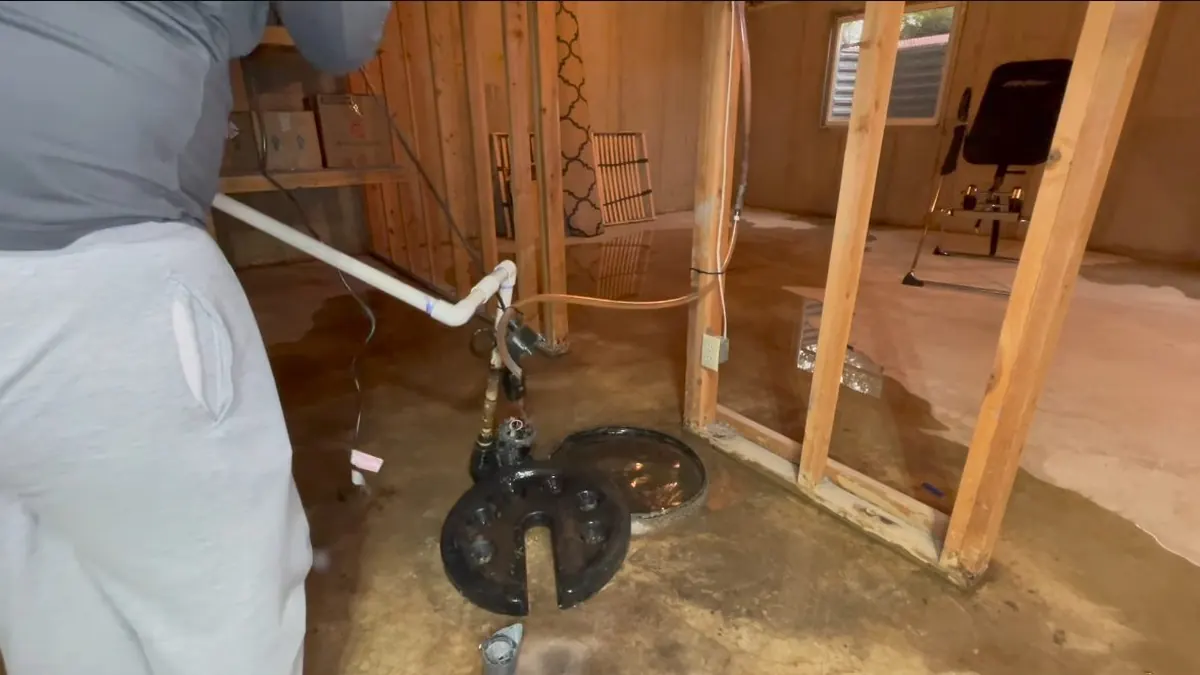
Pennsylvania winter and spring weather produces two things simultaneously: the groundwater conditions that most stress basement drainage systems, and the storm events most likely to cause power outages. Heavy rain, ice storms, and wind events drive water into basements while also taking down power lines. A sump pump that depends entirely on utility power stops working at exactly the moment it is most needed.
In the Schuylkill Valley, this is not a hypothetical. Pottstown area homes near Manatawny Creek, along the Schuylkill River, and in the lower sections of South Pottstown and Sanatoga face the highest hydrostatic pressure events during the same storms that produce the most frequent power interruptions. Homeowners in these areas who have experienced basement flooding know that the failure typically happened when the power went out during a rain event, not when the pump failed under normal conditions.
How battery backup sump systems work
A battery backup sump system adds a second pump to the pit, powered by a deep-cycle marine battery that charges continuously from utility power. When utility power is present, the primary pump handles all normal pumping and the battery stays charged. When utility power fails, the backup unit activates automatically and continues pumping from the battery. Depending on the battery capacity and the pump-down cycle frequency, most backup systems can run for 8 to 24 hours without utility power.
The backup pump is sized smaller than the primary pump, typically 1/3 HP versus the primary's 1/2 HP or higher capacity. This is intentional: the backup is an emergency system designed to manage average groundwater infiltration during a typical storm event, not to match the full capacity of the primary during a peak event. In very high-water conditions the backup may not be able to keep pace with peak inflow, but it handles the majority of events that cause flooding in normal utility-power-failure scenarios.
Battery vs. water-powered backup
Some homes have water-powered sump pump backups that use municipal water pressure to drive an ejector that pulls water from the pit. Water-powered backups have the advantage of working indefinitely without a battery, but they consume significant volumes of municipal water during operation and are only effective where utility water pressure is maintained during the storm event. For homes served by Pennsylvania American Water, utility water pressure typically remains available even during power outages, which makes water-powered backups viable in some situations. Battery backups are more common and are our standard recommendation because they are not dependent on any external utility and their performance is predictable.
What to look for in a battery backup unit
Discharge height (head) compatibility with your existing discharge line is the primary sizing consideration. The backup pump must be able to lift water to the discharge point at the required height; a unit sized for a different discharge height will pump less volume than rated and may not keep pace with infiltration.
Battery capacity determines how long the backup can run without charging. A standard 75 Ah deep-cycle battery typically provides 8 to 12 hours of backup under normal pumping conditions. High-water events that require the backup to cycle more frequently will reduce that runtime. In areas with high flood risk, a dual-battery system provides more runtime reserve.
Alarm and alert capability is increasingly standard in battery backup systems. Units with low-battery alerts and power-failure alerts give homeowners advance warning that the backup is running before the battery is depleted. Some systems offer smartphone connectivity for remote monitoring during extended trips.
Frequently asked questions
How long will a battery backup sump pump run on a single charge?
Most battery backup units provide 8 to 12 hours of pumping on a full charge under typical infiltration conditions. High-water events that require more frequent cycling will reduce that runtime. A dual-battery system extends runtime significantly for high-risk properties near Manatawny Creek or the Schuylkill River.
My primary sump pump is only a year old. Do I still need a battery backup?
Yes. Battery backup protects against power failure, not pump failure. A new primary pump stops working the moment utility power is interrupted, just as an old pump would. Power failure during a water event is the primary scenario where backup matters, and it can happen regardless of the primary pump's age.
Can I install a battery backup on any primary sump pump?
Most battery backup systems are compatible with standard 1/2 to 1-1/3 HP primary pumps using a standard sump pit. There are sizing and installation considerations depending on your existing system. We assess compatibility and recommend the appropriate backup unit during an estimate visit.
What happens when the backup battery itself dies?
Most backup systems have a low-battery alarm that activates before the battery is fully depleted, giving you notice to replace it. Deep-cycle marine batteries typically last 3 to 5 years with normal use. We recommend testing the backup annually and replacing the battery proactively at the 4-year mark rather than waiting for a failure notice during a storm.
Sump pump running without battery backup in Pottstown? We install backup systems for homes near Manatawny Creek and the Schuylkill River.