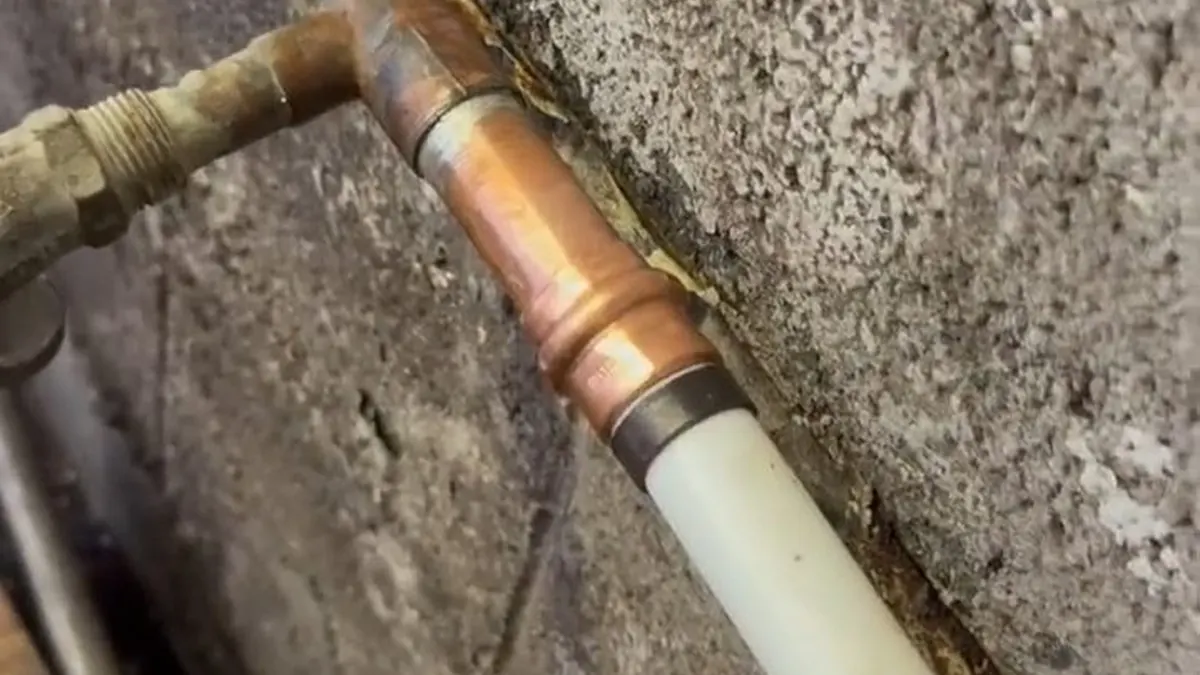
Why hidden leaks are harder to find in Pottstown's older homes
Pottstown's pre-WWII construction presents specific challenges for leak detection that don't exist in newer homes. Original plaster walls are thick and dense, which muffles the sound of leaking water more than drywall does. Rowhomes share party walls with adjacent properties, which means a leak can originate in one home's plumbing and travel through the shared wall cavity before appearing as water damage in a neighbor's wall. Pipe chases in older construction are often inaccessible without significant demolition.
Under-slab leaks in basements are another common issue in older Pottstown homes. Many have original water supply lines running through the concrete basement slab rather than above it. A pinhole in one of these lines leaks into the soil below and may not appear as surface water for months, all while running the water meter continuously and potentially undermining the slab.
The cost of finding a leak through exploratory wall or slab openings without prior detection work is typically much higher than using electronic detection first. A 6-inch-diameter hole in the right spot is far less disruptive than opening 20 linear feet of wall to find a pinhole in a copper elbow.
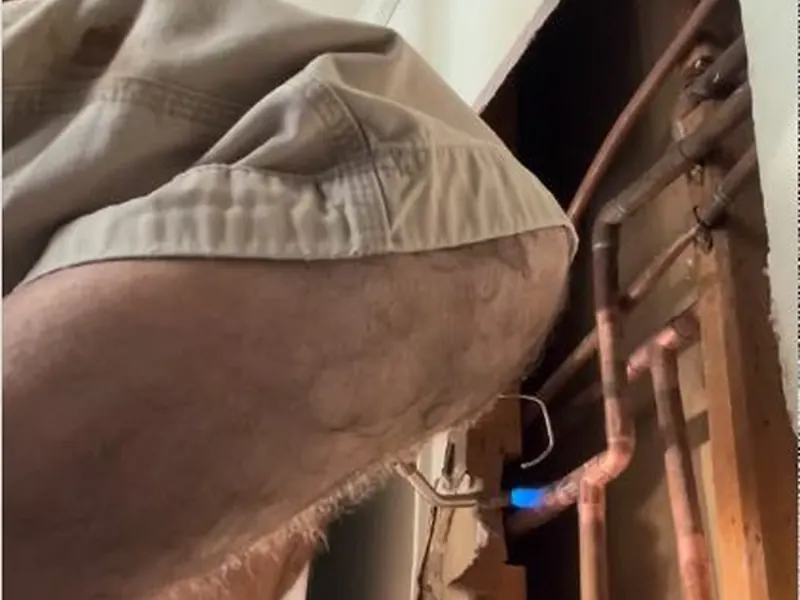
Leak detection methods we use
Water meter test. Before anything else, we verify that an active leak exists. With all fixtures and valves closed, a moving water meter confirms continuous flow. This test also gives us a baseline loss rate (gallons per hour) that helps quantify the leak before we locate it.
Pressure isolation. We isolate supply zones by closing individual shutoffs and branch valves, monitoring pressure drop in each zone. When the leak zone is identified, the search area shrinks substantially before we bring in detection equipment.
Acoustic detection. Electronic ground microphones and contact sensors amplify the sound of water escaping from a pressurized pipe through walls, floors, and ground cover. Sound intensity varies with distance, which allows triangulation to a precise location. Most effective for supply line leaks where water is under pressure.
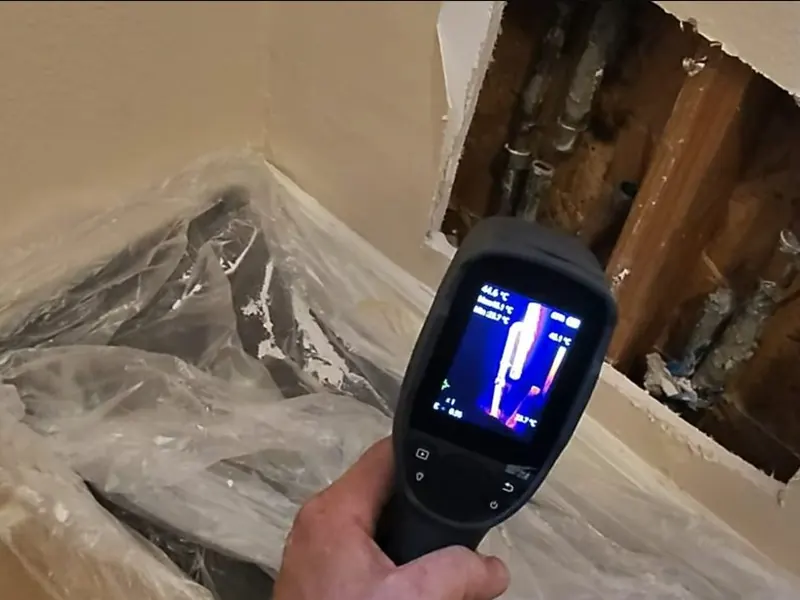
Thermal imaging. Water temperature differentials create detectable surface signatures through walls and floors. Hot water line leaks are particularly visible. Thermal imaging is most effective on plaster and drywall surfaces and is less reliable through tile.
After detection, we document the findings in a written report: the leak location, the detection method that identified it, the estimated leak rate, and the repair approach. You review this before we open anything.
Common signs you may have a hidden leak
A significant unexplained increase in your Pennsylvania American Water bill is the most common prompt. A supply leak of one or two gallons per hour can run $50 or more per month on a PA residential water rate. Other indicators include the sound of running water when all fixtures in the home are off; soft spots, staining, or bubbling paint on walls or ceilings not associated with a visible water intrusion event; mold or mildew smell in an area that seems dry; and warped flooring in a room without an obvious moisture source above.
Leak detection costs in Pottstown
| Service | Typical Cost (Pottstown Area) |
|---|---|
| Water meter test and pressure isolation | $150 – $300 |
| Acoustic leak detection (supply line) | $200 – $450 |
| Thermal imaging (wall or slab) | $250 – $500 |
| Full detection visit (meter + acoustic + thermal) | $350 – $650 |
| Written report of findings | Included |
Detection cost is separate from repair cost. If you proceed with repair after the detection visit, the detection fee is credited toward the repair invoice. The repair scope depends on the type and location of the leak found.
Frequently asked questions
How can you find a water leak without opening my walls?
We use a combination of methods depending on where the leak is suspected. Acoustic detection amplifies the sound of water escaping a pressurized pipe through walls and floors. Thermal imaging detects temperature differentials from wet areas behind plaster or drywall. Pressure isolation identifies which branch of pipe is losing pressure. Together these methods can locate most hidden leaks to within a foot or two, minimizing the opening needed for repair.
My water bill went up significantly but I don't see any visible leak. What do you do?
We start with a water meter test: close all fixtures and valves and watch the meter for movement. If the meter registers flow with everything off, there is an active supply leak. We then isolate supply zones to narrow the location, followed by acoustic detection and thermal imaging to pinpoint the leak within the confirmed zone.
Can you detect leaks under concrete slabs?
Yes. Acoustic detection is effective for under-slab supply line leaks, where the sound of water escaping under pressure transmits through concrete. Thermal imaging can detect temperature differentials at the slab surface where a warm-water line is leaking beneath. We can typically locate under-slab leaks to within 1 to 2 feet, significantly reducing the concrete opening needed for repair.
Do you open walls during a leak detection visit?
No. Leak detection uses non-invasive methods only. We locate the leak, document the finding in a written report, and then discuss repair options with you. If you proceed with repair, the access opening is limited to the area our detection work identified, which is typically much smaller than an exploratory opening without prior detection.
Leak detection service areas
We provide leak detection services throughout Pottstown borough and the Schuylkill Valley. Related services: burst pipe repair, water line repair, whole-home repiping.