How tankless water heaters work and why Pottstown's water matters
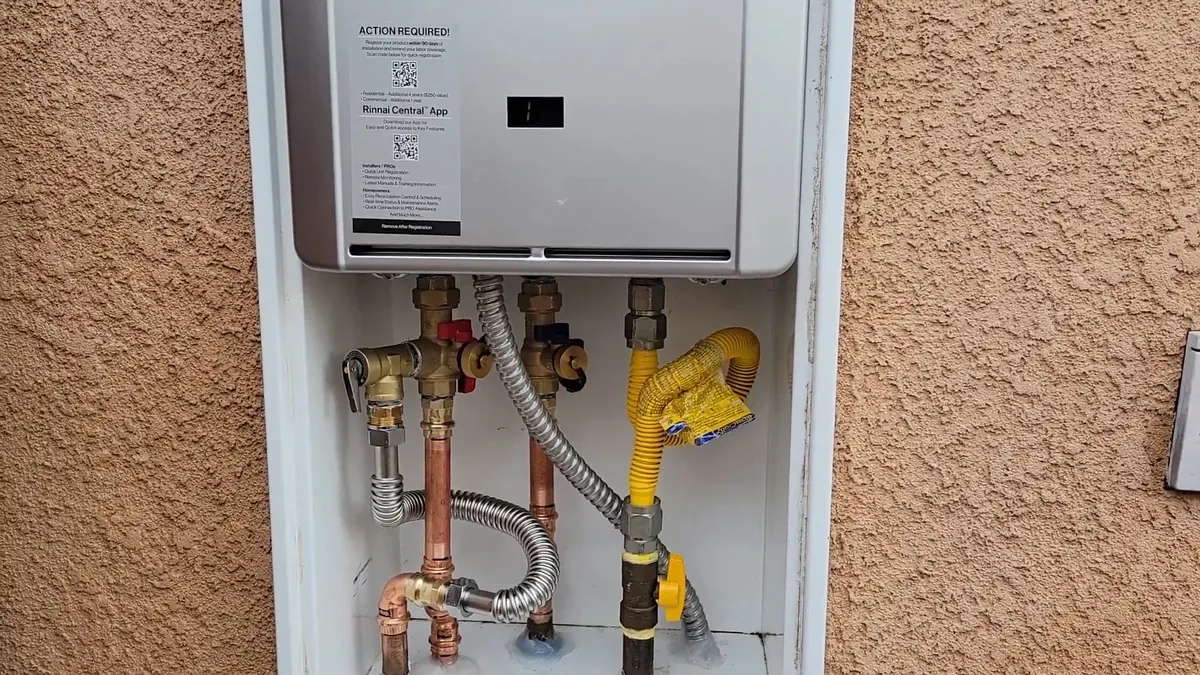
Tankless water heaters heat water on demand rather than maintaining a stored tank of hot water. Cold water flows through a heat exchanger, where gas burners or electric elements raise the temperature instantly as it passes through. There is no storage loss and no waiting for a depleted tank to recover; hot water is available as long as the unit is operating within its rated flow capacity.
The critical consideration for Pottstown homeowners is water hardness. Pennsylvania American Water's Schuylkill River source produces water at roughly 150 to 220 ppm of dissolved calcium and magnesium. As water passes through the heat exchanger at high temperatures, those minerals precipitate and deposit as scale on the exchanger's internal surfaces. Scale reduces heat transfer efficiency, restricts flow, and ultimately shortens the heat exchanger's life.
In soft water areas, tankless manufacturers typically recommend descaling every two to three years. In a hard water area like Pottstown, annual descaling is the appropriate maintenance interval and is a warranty requirement for most manufacturers. We perform the descaling service with a citric acid flush through the isolation valves, which dissolves calcium deposits and restores heat exchanger performance.
Gas line sizing and venting for older Pottstown homes
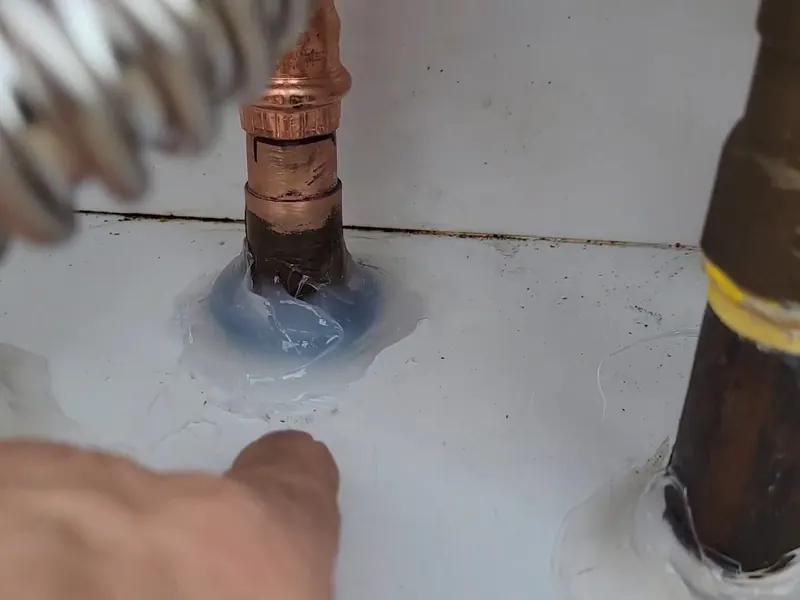
Condensing gas tankless water heaters require substantially more gas BTU input than tank-style units. A 50-gallon tank water heater typically draws 40,000 to 50,000 BTU/h. A high-capacity condensing tankless unit draws 150,000 to 199,000 BTU/h at peak demand. Older Pottstown homes with 3/4-inch gas supply lines may have adequate capacity for a residential tankless unit depending on the total gas load of the home, but the calculation needs to be done before installation, not after.
We assess the gas supply line diameter, available pressure at the meter, and the total BTU load of all gas appliances in the home before recommending a unit. If the supply line needs upgrading to 1 inch, we include that in the installation scope and cost estimate.
Venting for condensing tankless units differs significantly from traditional tank water heaters. Most condensing units use PVC direct vent (2-inch or 3-inch) rather than a flue. In Pottstown rowhomes, the route to an exterior wall for venting can sometimes require creativity: through a rim joist, through an exterior basement wall, or up through a first-floor closet to a side-wall termination. We plan the venting route during the estimate so there are no surprises on installation day.
Tankless water heater costs in Pottstown
| Service | Typical Cost (Pottstown Area) |
|---|---|
| Condensing gas tankless installation (replaces tank) | $2,500 – $4,500 |
| Gas line upgrade (if needed, 3/4" to 1") | $400 – $1,200 additional |
| Condensing electric tankless installation | $1,800 – $3,500 |
| Annual descaling service | $150 – $300 |
| Error code diagnosis and repair | $200 – $600 |
| Permit (Pottstown Borough Code Enforcement) | Included |
Estimates for the Pottstown area. Final installation cost depends on gas line condition, venting route complexity, and whether electrical panel upgrade is needed for electric units. Most gas tankless installations in older Pottstown homes include PVC vent pipe routing as part of the base scope.
Frequently asked questions
Do I need to descale my tankless water heater in Pottstown?
Yes, annually. Pennsylvania American Water's Schuylkill River source produces water at roughly 150 to 220 ppm of hardness. At that level, mineral scale accumulates in the heat exchanger fast enough to require annual flushing. Most manufacturers including Navien, Rinnai, and Noritz require annual descaling to maintain the warranty. Skipping maintenance for multiple years reduces efficiency and can void the heat exchanger warranty.
Will my existing gas supply line handle a tankless water heater?
Older Pottstown homes often have 3/4-inch gas supply lines. Most residential tankless units run on 3/4-inch supply at minimum, and higher-BTU units may need 1-inch supply to maintain full output capacity. We assess the gas line size, pressure at the meter, and available BTU capacity before installation to determine whether a gas line upgrade is part of the scope.
Can a tankless unit replace a tank water heater in a Pottstown rowhome?
Yes. Tankless units are wall-mounted and significantly more compact than tank units, which suits rowhome basement and utility closet installations well. Venting requirements differ from traditional tank units: most modern condensing tankless units use 2-inch or 3-inch PVC direct vent rather than a metal flue. We assess the venting route and gas supply before the installation date.
How long does a tankless water heater last?
With annual descaling and proper maintenance, residential tankless water heaters typically last 15 to 25 years, significantly longer than tank-style units. The heat exchanger is the most expensive component; keeping mineral scale controlled with annual service extends its life and maintains efficiency over the full service life of the unit.
Service areas
We install and service tankless water heaters throughout Pottstown borough and adjacent Schuylkill Valley communities. See also water heater repair and tank-style water heater installation.